
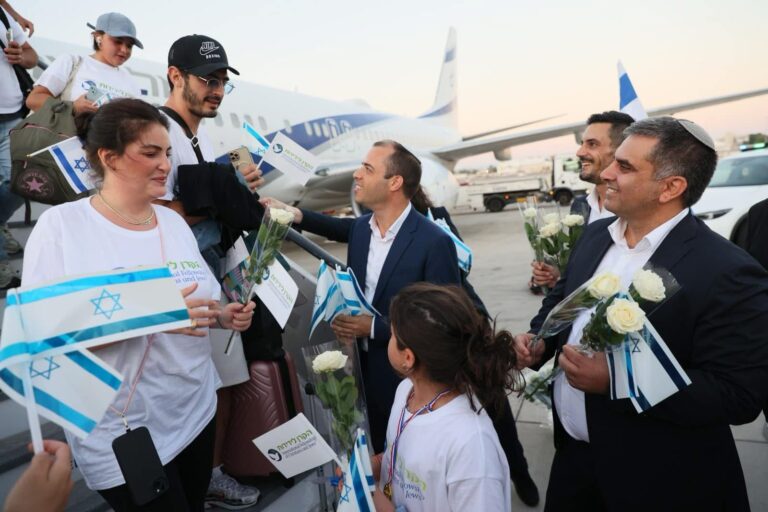
The Ministry of Aliyah and Integration released today (Wednesday) its annual summary of immigration figures, covering the period from Passover 5784 to Passover 5785. Despite the war and ongoing security challenges that Israel has faced over the past year, immigration did not stop: 27,281 new olim (immigrants) arrived in Israel and chose to begin their lives anew.
Russia led the list of countries of origin this year, with 15,188 immigrants. It was followed by the United States, France, and Ukraine. In addition, there was a unique wave of individual immigrants from countries such as South Korea, Kenya, Zambia, and even Afghanistan—each one arriving alone.
15,020 Families
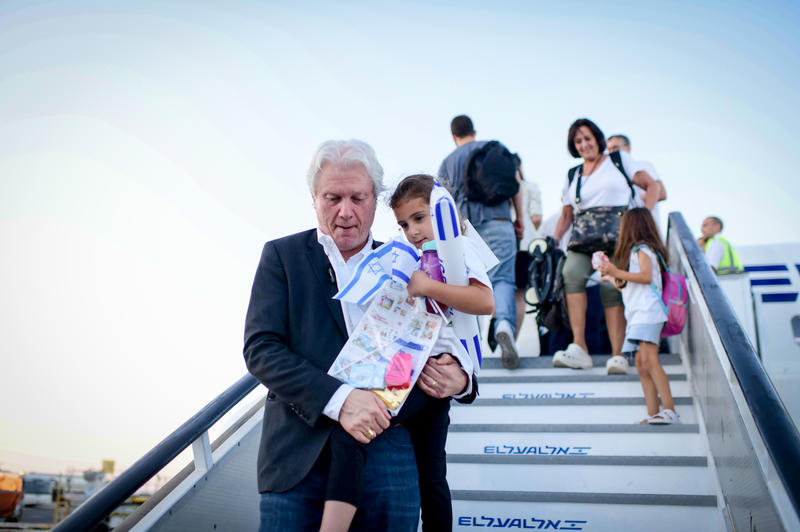
The new immigrants came from across the age spectrum—212 were aged 85 or older, and 5,700 were children under the age of 18, arriving as part of 15,020 families. The largest age group was 25 to 34, totaling 4,519 individuals (16% of all immigrants), representing a meaningful addition to Israel’s workforce.
1,345 Immigrants from the Medical Field
The olim bring with them a broad range of professional experience. Among them are 1,345 from the medical field, 3,236 engineers, 297 artists and athletes, and 13 farmers. Others include professionals in industry, education, high-tech, and more.
According to the ministry, the new immigrants settled in 286 different communities across the country. Tel Aviv–Jaffa absorbed the largest number (4,215 immigrants—15.5%), followed by Netanya (4,066) and Haifa (3,032). In addition to the major cities, many chose to settle in smaller communities such as Mitzpe Ramon, Ma’ale Gilboa, and Revava—demonstrating both geographic diversity and a desire to become part of Israel’s local social fabric.