

The announcement comes just days after Israel declared the removal of customs duties on U.S. imports, a goodwill gesture that now stands in stark contrast to the Trump administration’s escalating trade measures.
A Trade Shift That Could Hit Israeli Exports
Israel, a longtime U.S. ally with strong economic ties to Washington, now finds itself on a growing list of countries facing elevated import taxes under Trump’s “America First” trade agenda. The 17% levy is a substantial increase that could impact sectors ranging from technology and pharmaceuticals to agriculture.
The United States is Israel’s largest single trading partner. In 2024 alone, Israeli goods exports to the U.S. totaled $17.3 billion, with services exports reaching an additional $16.7 billion. Despite a 1985 bilateral agreement that already exempted about 99% of Israeli exports from U.S. tariffs, the new measure could affect the remaining categories — particularly agricultural and food products — and potentially unravel parts of the existing free-trade dynamic.
עוד באותו הנושא
- Israel Strengthens Global Alliances Amid Regional and International Challenges
- Hostages No More: IDF Returns Two Fallen Heroes from Gaza in Daring Operation
- Freed Hostage Turns Her Pain Into Strength at the UN Security Council
- On the 1st of Elul 1897, a National Return to the Land Joined the Spiritual Return to God
— Donald J. Trump (@realDonaldTrump) April 2, 2025
Tariffs Target Global Trade, Allies and Rivals Alike
While Israel’s 17% tariff falls on the lower end of the new scale, the broader plan will see steep tariffs imposed on nations like China (34%), India (26%), South Korea (25%), and the European Union (20%). In contrast, countries such as the UK, Egypt, Saudi Arabia, and Lebanon will face a 10% tariff.
The highest levies — up to 50% — are reserved for smaller economies like Lesotho and the French territory of Saint Pierre and Miquelon. Trump cited trade deficits, domestic industry protection, and foreign government subsidies as reasons for the recalibrated tariffs.
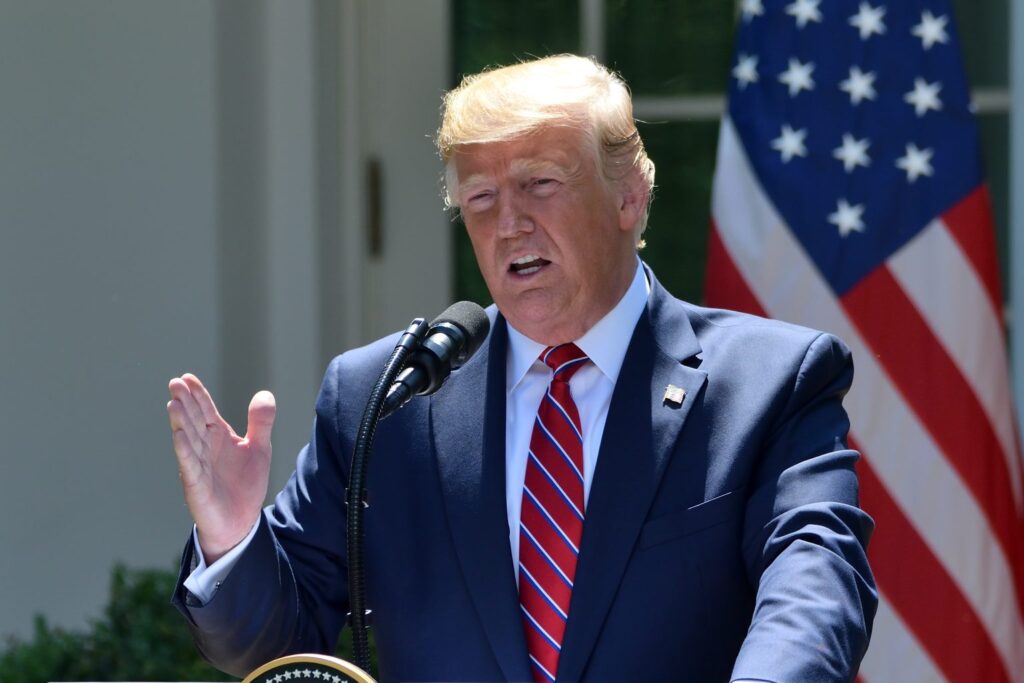
“This is the day we’ve waited for, America’s economic independence,” Trump declared from the White House. “April 2, 2025, will be remembered as the day we began bringing jobs and factories back to American soil.”
An Unexpected Blow to Israeli Policy
Trump’s decision comes at a sensitive moment in U.S.-Israel trade relations. Just this week, the Israeli government, led by Prime Minister Benjamin Netanyahu, Finance Minister Bezalel Smotrich, and Economy Minister Nir Barkat, approved a full exemption on U.S. imports. The move, intended to deepen economic cooperation, now appears misaligned with Washington’s new direction.
According to Israel’s Ministry of Finance, the tariff removal was expected to have minimal fiscal impact, with total customs revenue from U.S. imports estimated at just 42 million shekels annually (around $11 million), most of it related to agriculture.
However, with Trump’s global tariffs set to go into effect as early as April 5 for the baseline 10%, and on April 9 for higher-rate countries, Israel now faces new economic uncertainty — and limited time to negotiate exemptions or carve-outs.