
Israeli Rescue Unit Deployed to Thailand After Major Earthquake
A delegation from Israel’s Search And Rescue Brigade (60th) departed for Thailand to assist in rescue operations following the earthquake that struck the country. At the same time, the unit conducted its scheduled training exercise this week at the Home Front Command base in Ramla. The exercise, part of ongoing emergency preparedness, involved experienced reserve soldiers and was reported on the official IDF website.
Ready for Any Type of Civilian Rescue
Twice a year, 60th’s reservists gather for an intensive week of training, honing the skills required for complex rescue missions. “We need to be prepared for every possible civilian rescue scenario,” explained Lt. Col. (Res.) A., a company commander in the unit. “That means being ready for any situation, wherever it may strike. We don’t get to choose the time or place.”
The unit operates throughout Israel and occasionally abroad, often under extreme conditions and with minimal notice. Every rescue mission demands precise planning, expert technique, and the ability to adapt in real time.
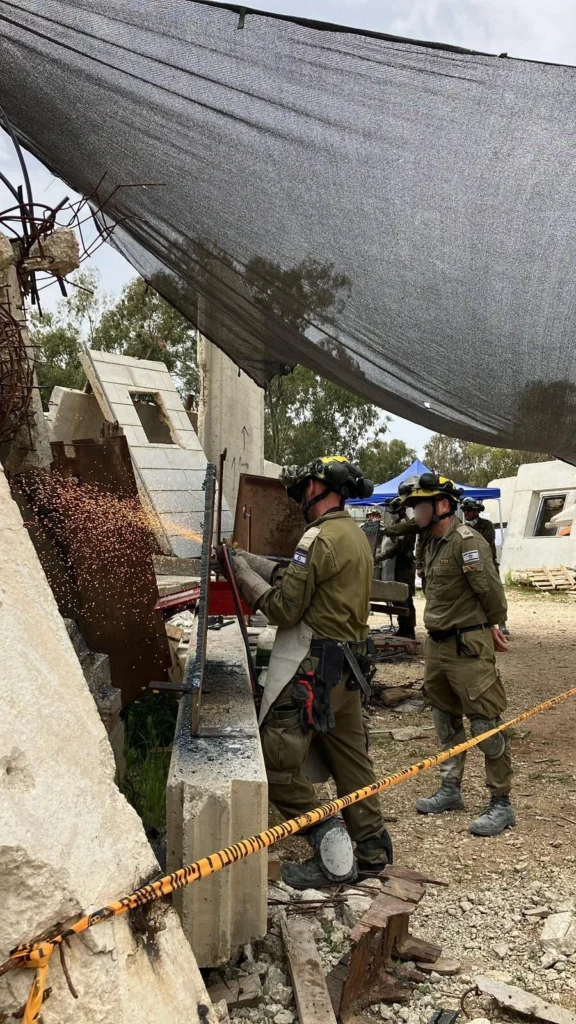
From the Field to the Frontlines—Now in Thailand
While the training was underway in Israel, a separate team from the unit was already en route to Thailand to support local rescue efforts following the quake.
“Unfamiliar Terrain Is Nothing New to Us”
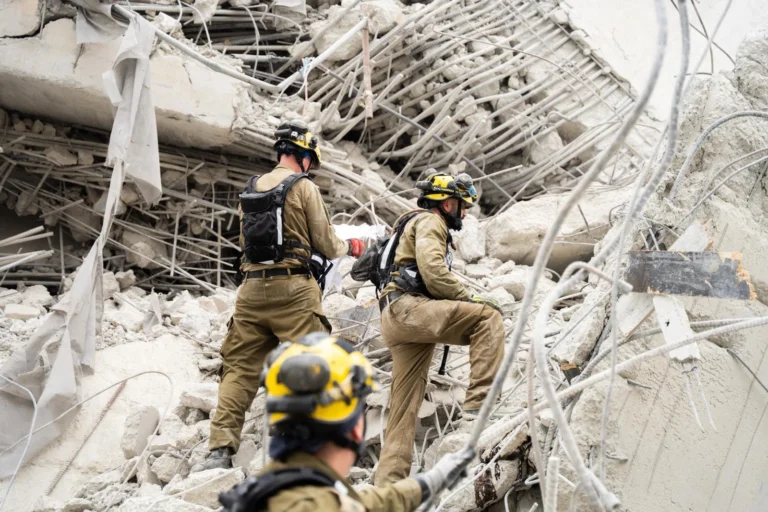
“Working in unfamiliar environments doesn’t faze us,” said the company commander. “We’re on call 24/7 for moments like these. The training our reservists are going through this week is designed to prepare them for exactly this kind of deployment—whether it’s navigating unstable terrain, rescuing victims from collapsed concrete, or reinforcing damaged building structures through tunneling to prevent further collapse.”
So Trained They Could Do It in Their Sleep
In the first stage of training, the soldiers practiced each rescue scenario individually, gaining in-depth familiarity with every method. “Before they can respond to a multi-site event, they need to know each protocol inside and out—so well they could carry it out in their sleep,” said Lt. Col. (Res.) A.
“We start from the basics,” he added. “Decisions as small as where and when to sleep during a long mission, what to eat, and how to tailor equipment to the exact demands of a specific operation.”
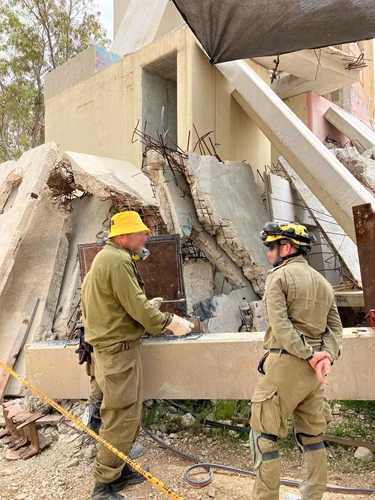
As the training progressed, the team drilled essential skills like breaking through ceilings, building support structures, and cutting through concrete, steel, and wood. “If a person is trapped three floors below ground, we might need to breach multiple floors, all while reinforcing the surrounding structure to avoid collapse—and doing it all under extreme time pressure. To succeed, every move has to be executed with precision.”
Trusted Without Hesitation
By week’s end, the reservists will move into the final stage of training—a comprehensive rescue simulation combining everything they’ve practiced. If successful, the drill will be marked as complete.
“At the end of the day, we have to be able to trust our rescuers with our eyes closed,” the commander concluded. “The earthquake in Thailand caught everyone off guard, but within just a few hours, a team of Israeli experts was already on a plane to help. Taking part in missions that are this difficult and complex is both a privilege and a tremendous responsibility. We have to be ready to respond—anywhere, anytime.”