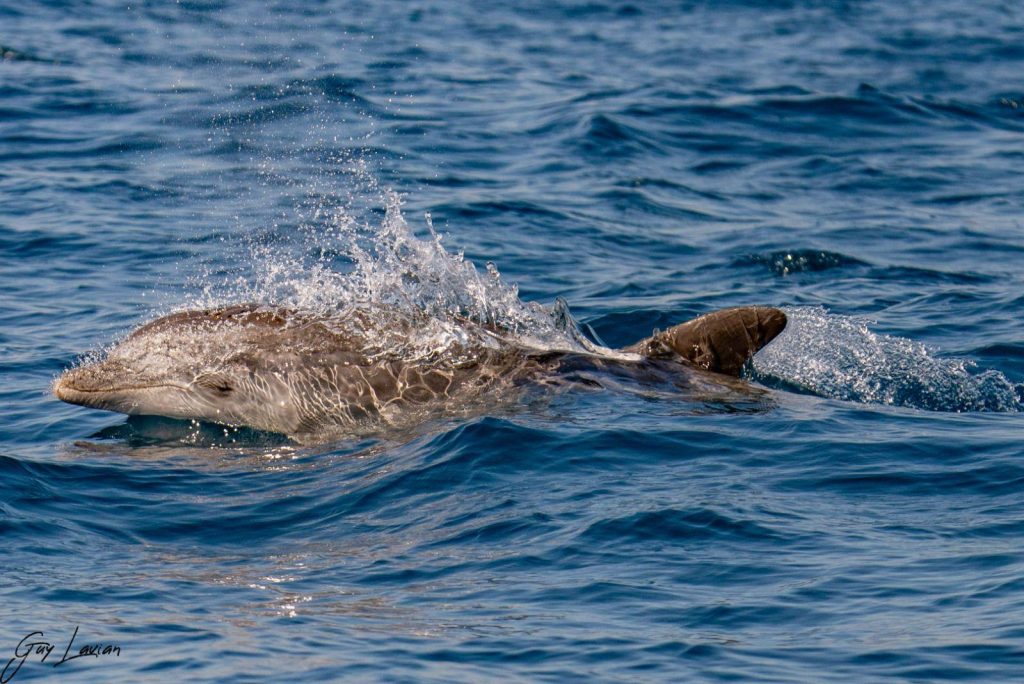

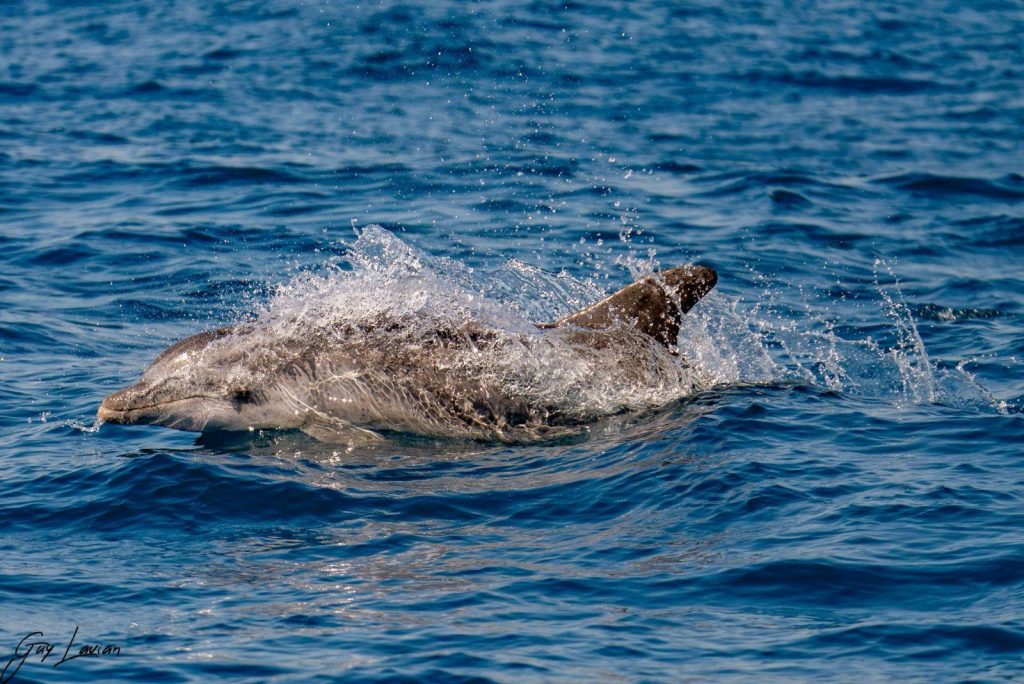
After a series of marine apex predator deaths along Israel’s coastline, a welcome piece of good news has surfaced: during a routine patrol by the Israel Nature and Parks Authority (INPA), three common bottlenose dolphins (Tursiops truncatus) were spotted about eight kilometers west of Rishon LeZion’s shores.
Guy Luyan, director of INPA’s Marine Unit, shared: “During a patrol about 2.5 miles off Rishon LeZion following a trawler, three dolphins suddenly appeared. They played in the waves for a few minutes before continuing on their way.”
Hooks and Shlomi are Returning Friends
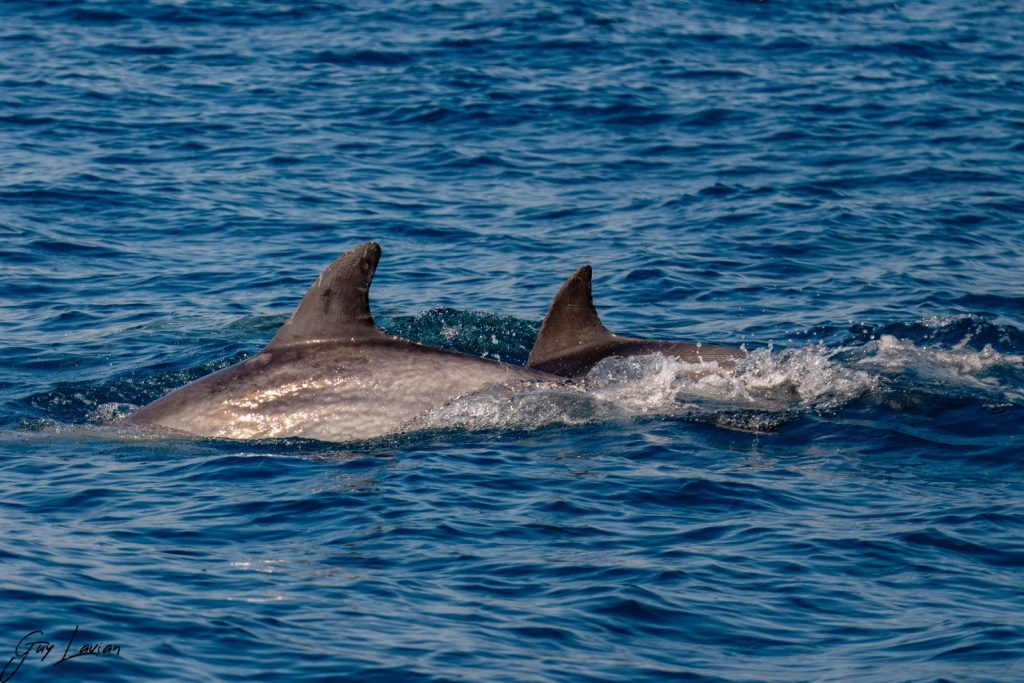
Researchers from the NGO Delphis and the Morris Kahn Marine Research Station at the University of Haifa identified two of the dolphins from previous visits. These individuals, named “Hooks” and “Shlomi,” were recognized by comparing images of their dorsal fins with existing data.
“The dorsal fin of a dolphin is an excellent identification tool, much like a human fingerprint,” explained Kim Kobo from the Morris Kahn Marine Research Station. This is not the first time “Hooks” and “Shlomi” have been recorded in Israel’s territorial waters—last November, they were documented during a dolphin survey conducted in collaboration with Delphis.
Israel’s local dolphin population consists of around 400 individuals, some of whom have been given names.
The Common Bottlenose Dolphin: A Mediterranean Resident
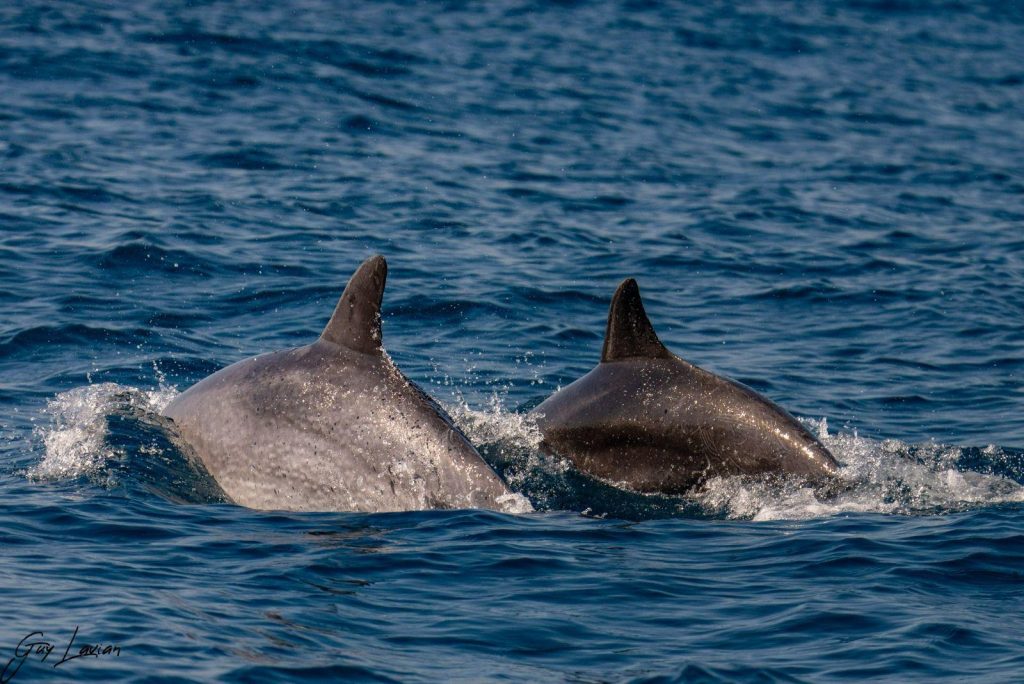
The common bottlenose dolphin is the most well-known and widespread of the two dolphin species inhabiting the Mediterranean coast. While this particular Mediterranean subpopulation is not classified as endangered, it is important to remember that these are wild animals. The Israel Nature and Parks Authority urges the public to keep a respectful distance and avoid approaching these marine mammals.