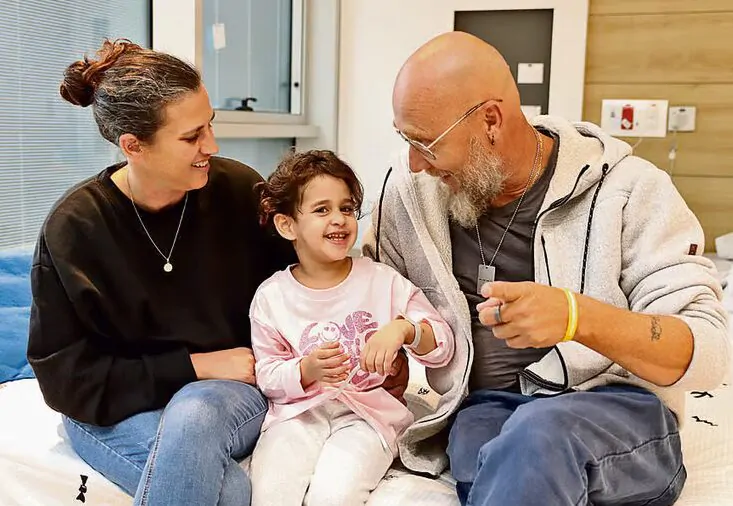

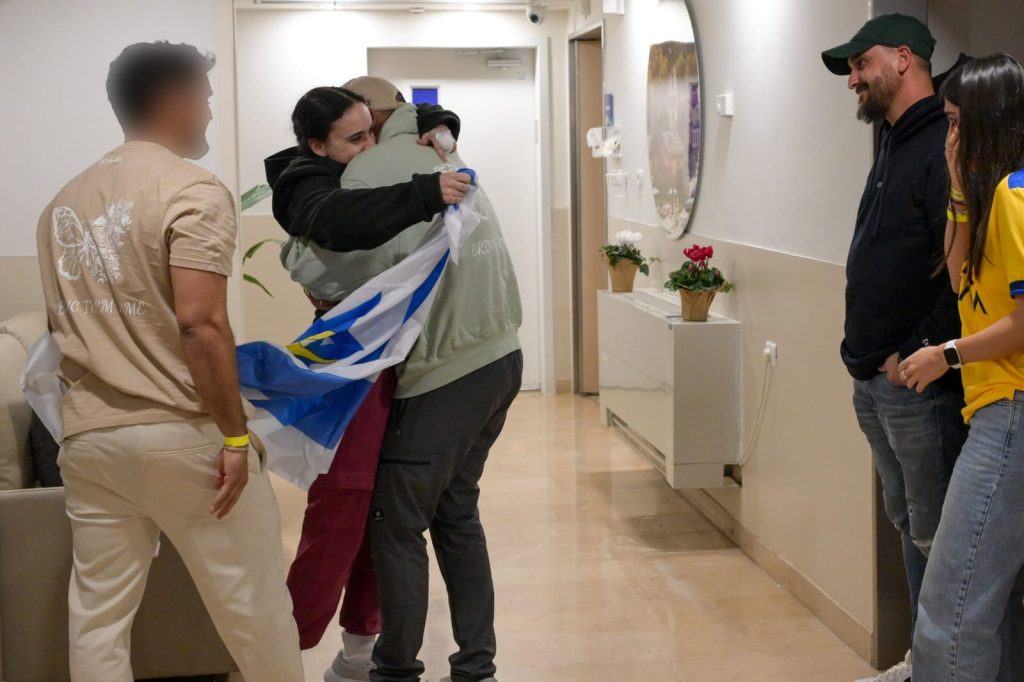
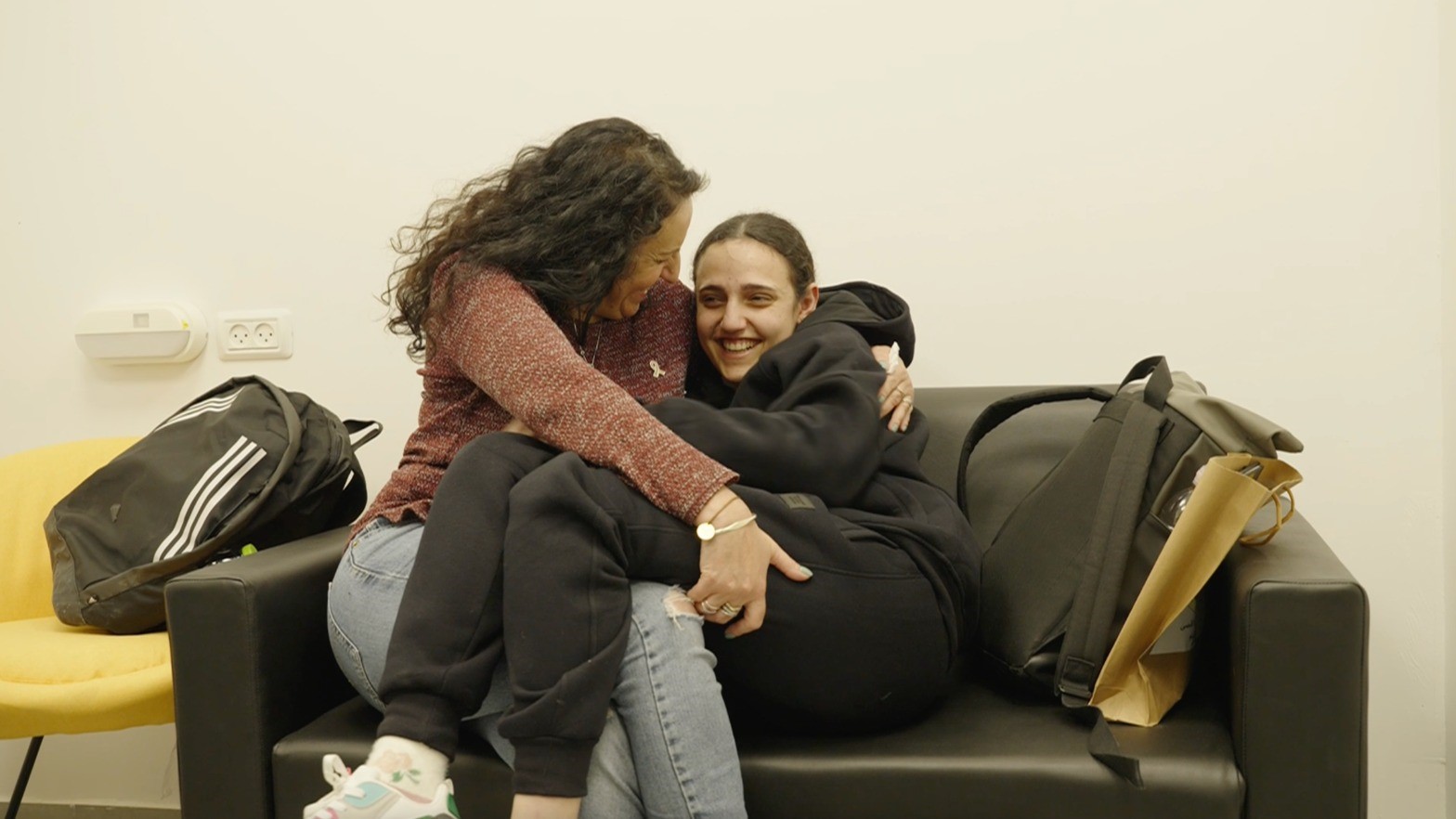
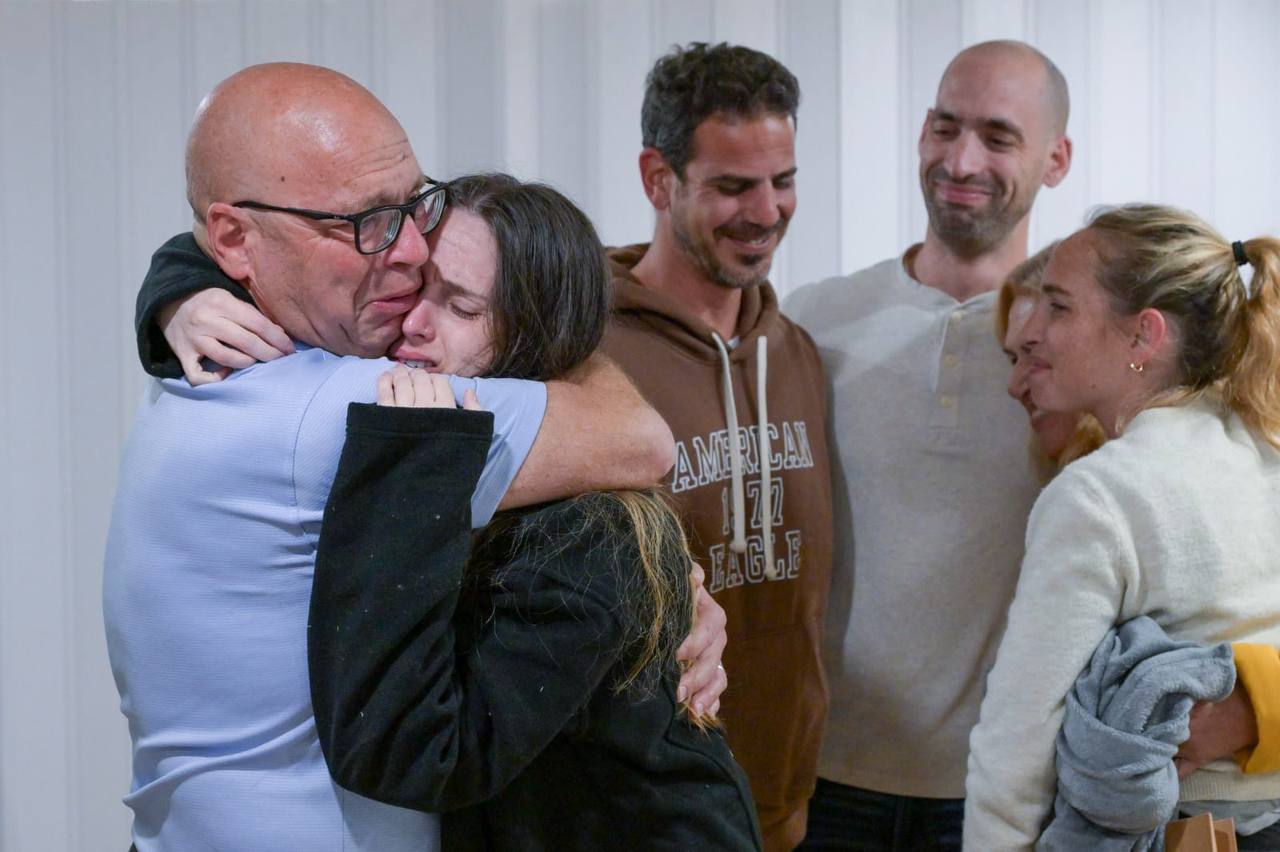
After an emotional day that captivated the nation yesterday (Sunday), returnees Romi Gonen, Doron Steinbrecher, and Emily Damari were handed over to IDF and Shin Bet forces and reunited with their families at Sheba Medical Center, Tel Hashomer. Upon arrival, the three were taken directly to private hospital rooms for heartfelt reunions with close and extended family members.
Medical and Emotional Care
Dr. Yael Frenkel-Nir, director of the general hospital and head of the returnees’ intake operation at Sheba, shared her emotions:
“Their medical condition allows us to focus on what matters most—their reunion with their families—and to delay medical matters by a few hours.”
Dr. Sefi Mandelovitz, deputy director of the Ministry of Health, added: “We are meeting them after 471 days in captivity, an unimaginable reality. We are fully prepared to address the medical issues stemming from their ordeal.”
Medical Assessments Begin Today
Starting today (Monday), the returnees will undergo comprehensive medical examinations, in addition to the initial checkups conducted upon their handover by the IDF. These will include blood tests, weight and height measurements, full blood counts and biochemistry panels, as well as levels of vitamin C, vitamin D, total protein, magnesium, and zinc. A dietitian will accompany them throughout their stay to guide families on managing the risks of refeeding syndrome, despite their seemingly stable condition.
Moments from the Reunion of the Returnees with Their Families, at Sheba Medical Center, Tel Hashomer | Credit: Omer Miron / GPO
The returnees will also undergo tests to rule out physical injuries potentially sustained in captivity, providing a detailed assessment of their medical state. Simultaneously, based on medical evaluations, psychologists will assess the psychological impact of their captivity and recommend treatments as needed.