
After more than a century of Egyptology and archaeology we now understand the story more clearly and see the obvious references to contemporary Egyptian beliefs and ideas. While we may not (yet!) have found Pharaoh’s chariot, it is clear that the story we tell is deeply rooted in Egypt of the time of the Exodus. There are so many examples, we will just look at a few.
Staff in Ancient Egypt
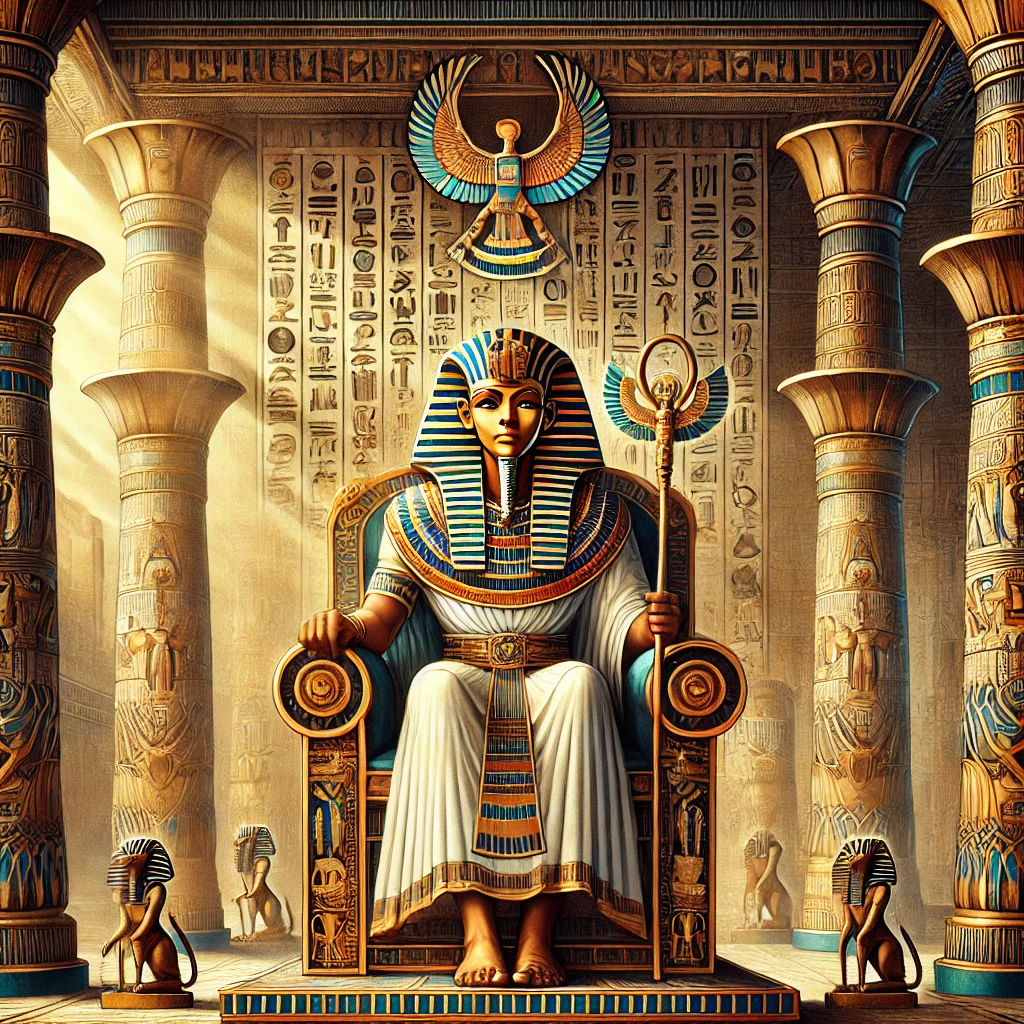
Let’s start with Moses’ constant accessory – his staff. It is always with him and he performs miracles with it, one of which is turning it into a snake and back to a staff. What are two significant symbols of power in ancient Egypt? Think of statues of Pharaohs that you have seen. The ruler is often seen holding a staff, sometimes one with a snake head, and/or wearing a crown with a snake, a uraeus. When Moses appears before Pharaoh and his magicians with a staff that becomes a snake, he is showing that he is going head to head with Pharaoh. You think you are the ruler of the universe? Think again, the true holder of the staff is God.
עוד באותו הנושא
- Selichot Season Opens with Spiritual Power and Unifying Prayer at the Western Wall
- On the 1st of Elul 1897, a National Return to the Land Joined the Spiritual Return to God
- Israel’s Archaeological Breakthroughs Reveal a Fragile Heritage and Unexpected Discoveries
- A Wedding, a Birth and a Memorial: Bereaved Families Transform Grief into Life
Darkness and Light
Ancient Egypt had a pantheon of gods. The most significant ones were the Nile, source of water and hence life, and the sun god, known as Ra. If we look at the plagues, there is an emphasis on showing that God has power over these “gods.” The first and second plagues, blood and frogs, directly affect the Nile. The eighth and ninth plagues, locusts and darkness, shut out the sun. When the Israelites leave Egypt it is the middle of the night. All is darkness for the Egyptians – Ra has forsaken them – but there is light for the Israelites because God is with them.
Evil
There are several word games the text plays with Ra, the sun god for Egyptians. The word “ra” means evil in ancient (and modern) Hebrew. For example, when Moses pleads with God not to kill the sinning Israelites, he says why should you give the Egyptians an excuse to think you had evil intentions when you took the Israelites out of Egypt. But in Hebrew there is a double meaning: למה יאמרו מצרים לאמר ברעה הוציאם Meaning, why should the Egyptians say that Ra (evil) took them out?
Heavy Heart
Finally, we hear over and over that Pharaoh makes his heart heavy, or that God does it for him,
ויכבד לב פרעה. Why should refusing to comply with Moses mean that Pharaoh’s heart is “heavy?”
We all know that ancient Egyptians believed in a full afterlife, replete with all the pleasures one had in this world. But in order to get there, the dead person had to pass a test. As recounted in the pictures and spells we call the Book of the Dead, after death and mummification, a dead person’s heart is weighed against the feather of the goddess Maat. If the heart is lighter than a feather, the person led a good life and can continue to the afterlife. But if the heart is heavy, it is fed to the monster Ammut, a creature with the head of a crocodile, the shoulders of a leopard and the behind of a hippopotamus. Not a great end and definitely something Pharaoh wanted to avoid. To be told he has a heavy heart is literally the equivalent of sending Pharaoh to hell.
The many references to ancient Egypt throughout the Exodus story place us firmly in the time and place that the Israelites slaves inhabited. They are the best proof that the story is rooted in historical reality.
Much of what I have written here is based on a small book written by Dr. Beni Gezundheit some years ago, I thank him and take credit only for the mistakes. Shulie Mishkin is a guide and educator in Israel. She can be reached for tours, lectures, or inquiries about ancient Egyptians at [email protected]